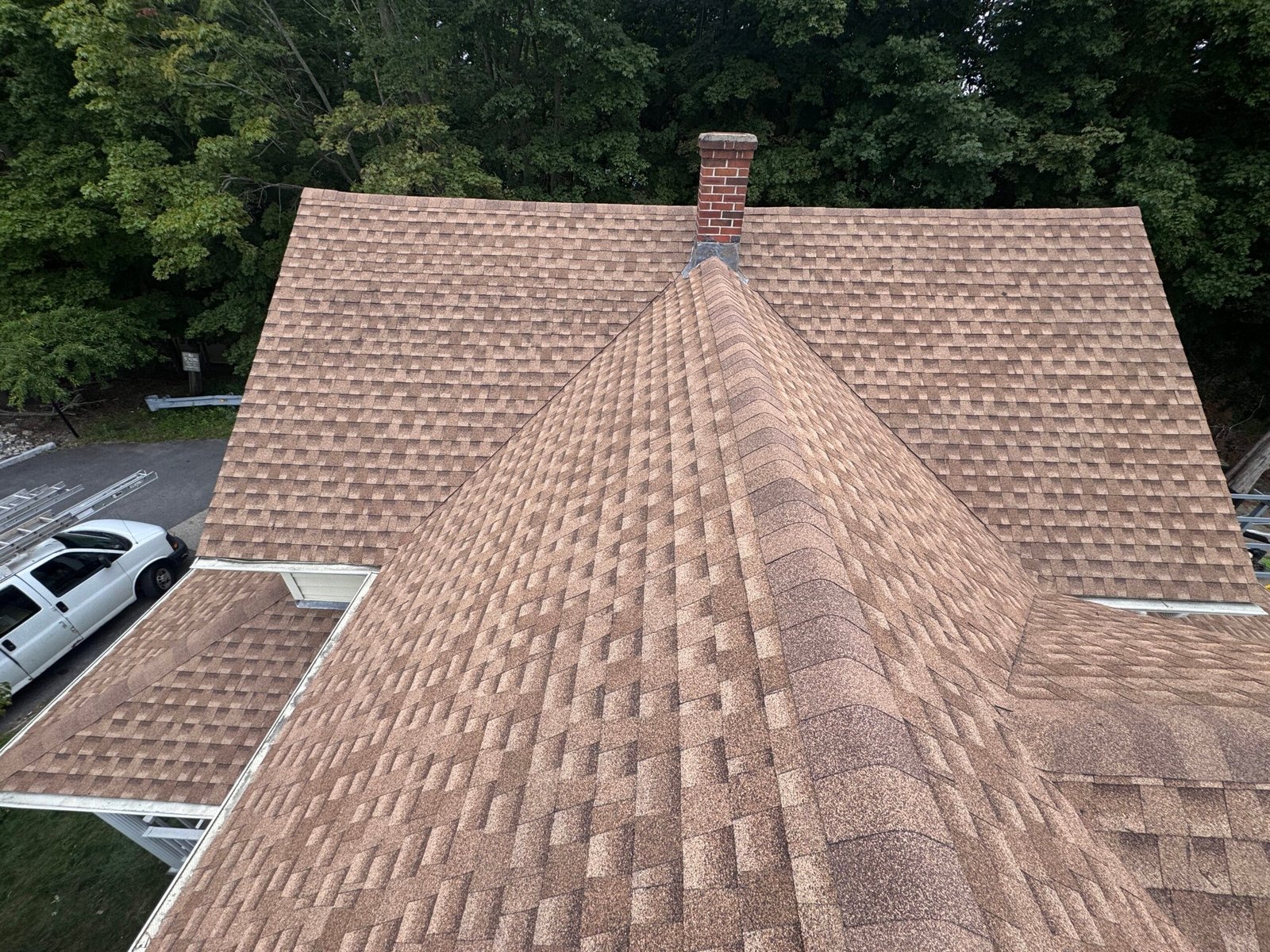
Most homes in Rhode Island have a gable roof, a hip roof, or a combination of both. Each shape has strengths, and each has its own spots where leaks tend to start.
Gable Roofs
A gable roof has two sloped sides that meet at a ridge, with a triangular wall (the gable end) at each end. It is the classic New England shape.
- Pros: simple to frame and roof, sheds rain and snow well, easy to ventilate, and usually less expensive to replace.
- Cons: the gable ends catch more wind, and the rake edges need good drip edge and fastening to stay put in storms.
Hip Roofs
A hip roof slopes down on all four sides, with no gable walls.
- Pros: very stable in high wind, with eaves on every side to protect the walls.
- Cons: more complex to frame and roof, more hips and ridges to cap, less attic space, and usually more expensive.
Hip and Gable Combinations
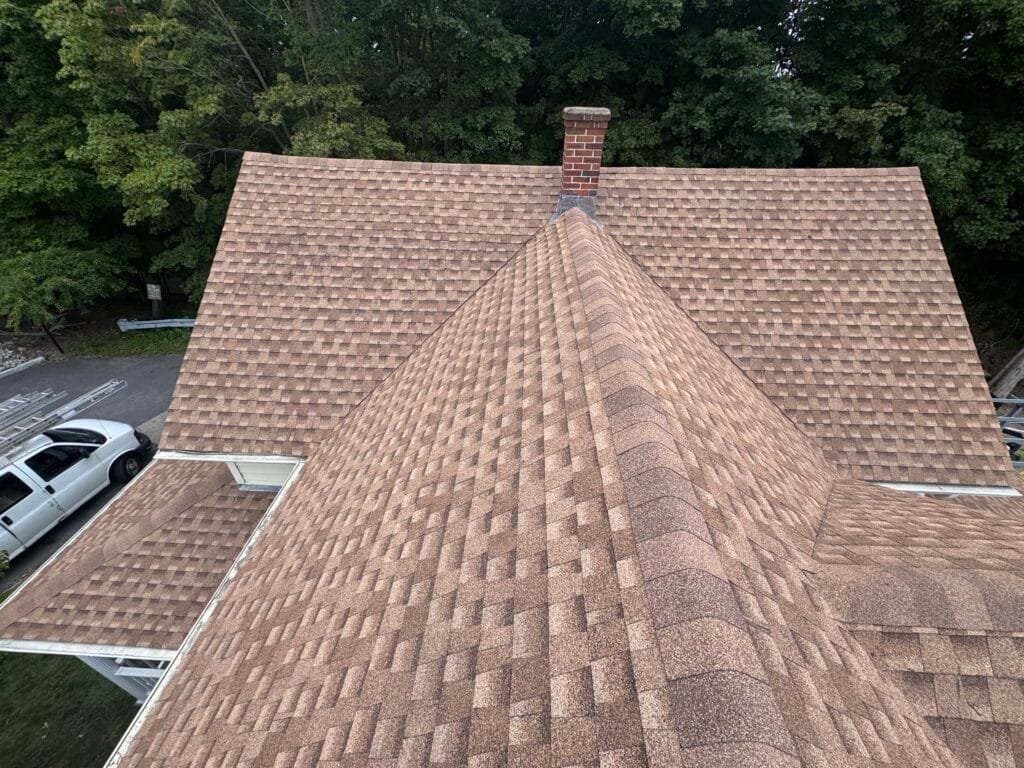
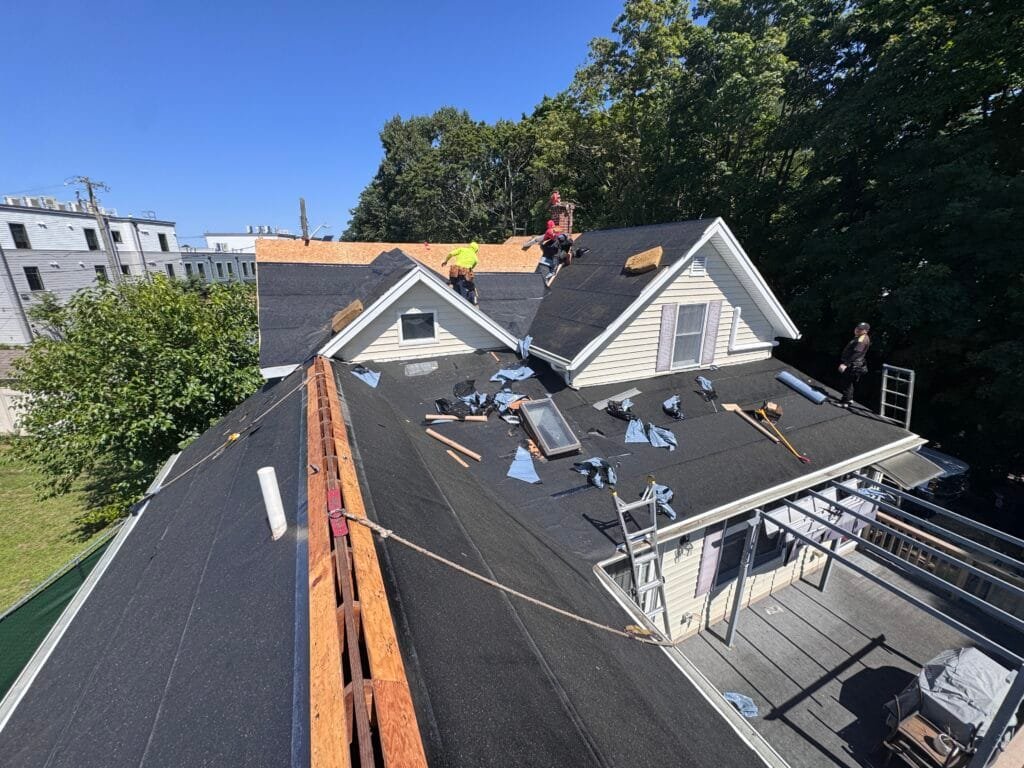
Many homes combine the two: a main gable with hip sections, or dormers and additions tied into the main roof. These roofs look great, but every place the planes meet is a valley or a wall intersection, and those are where leaks happen. Valleys need ice and water barrier, and roof-to-wall intersections need step flashing installed correctly and shingles cut back per the manufacturer’s details.
Which Is Better?
Neither shape is better everywhere. A hip roof handles wind well, and a gable roof is simple and cost-effective. On a replacement, the shape is already set, so what matters is doing the details right for that shape: the rakes on a gable, the hips and ridges on a hip roof, and the valleys and walls on a combination.
Need a roof or a second opinion on one?
Roofing in Rhode Island · Roof pricing · Financing · Call 401-919-1795